
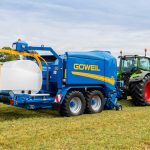




A robust, advanced and professional coil wrapper



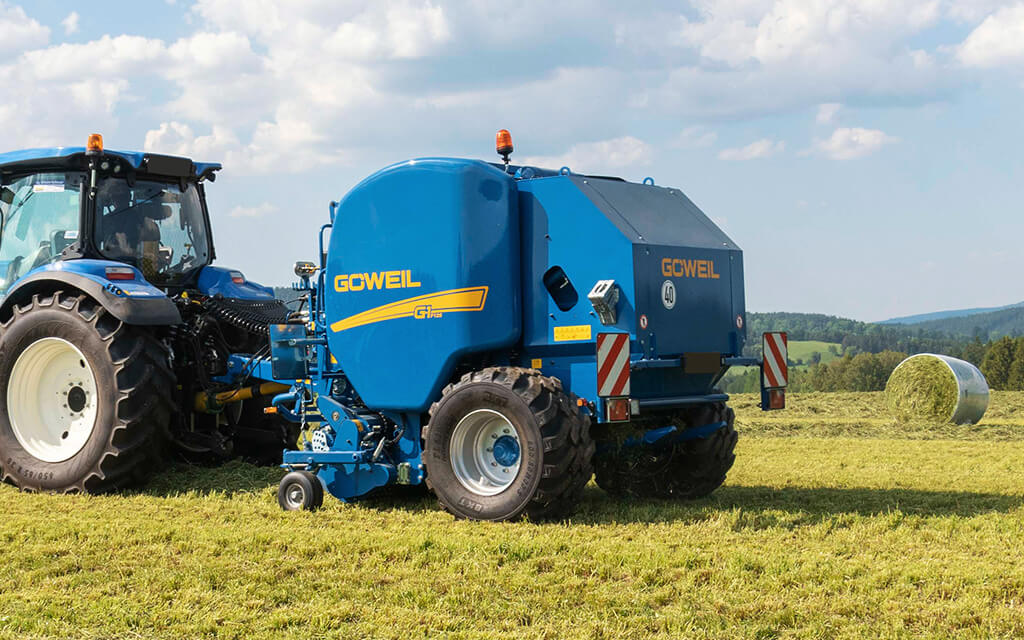
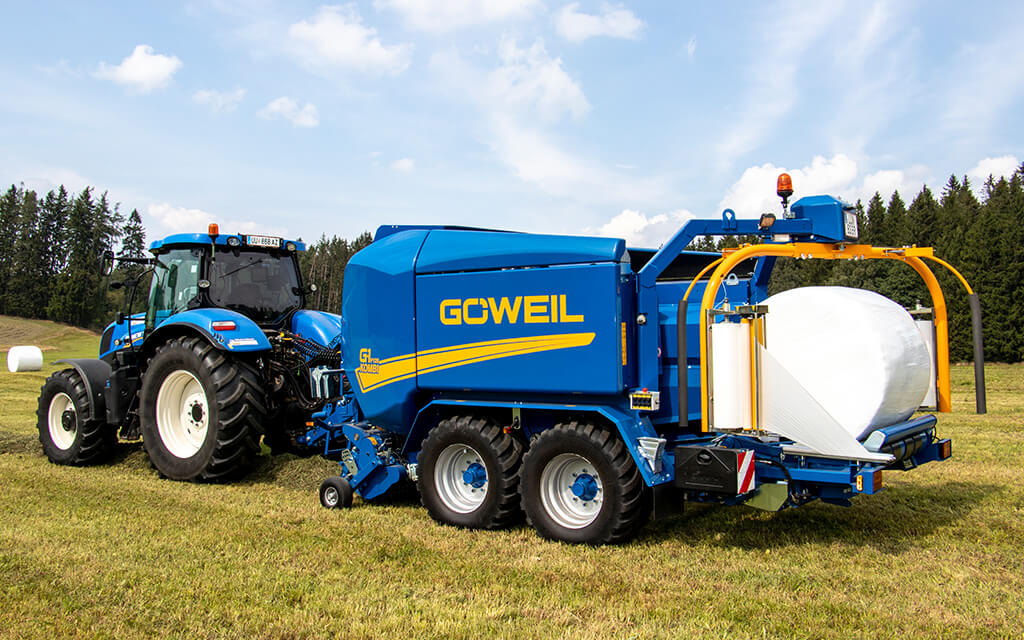
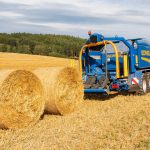
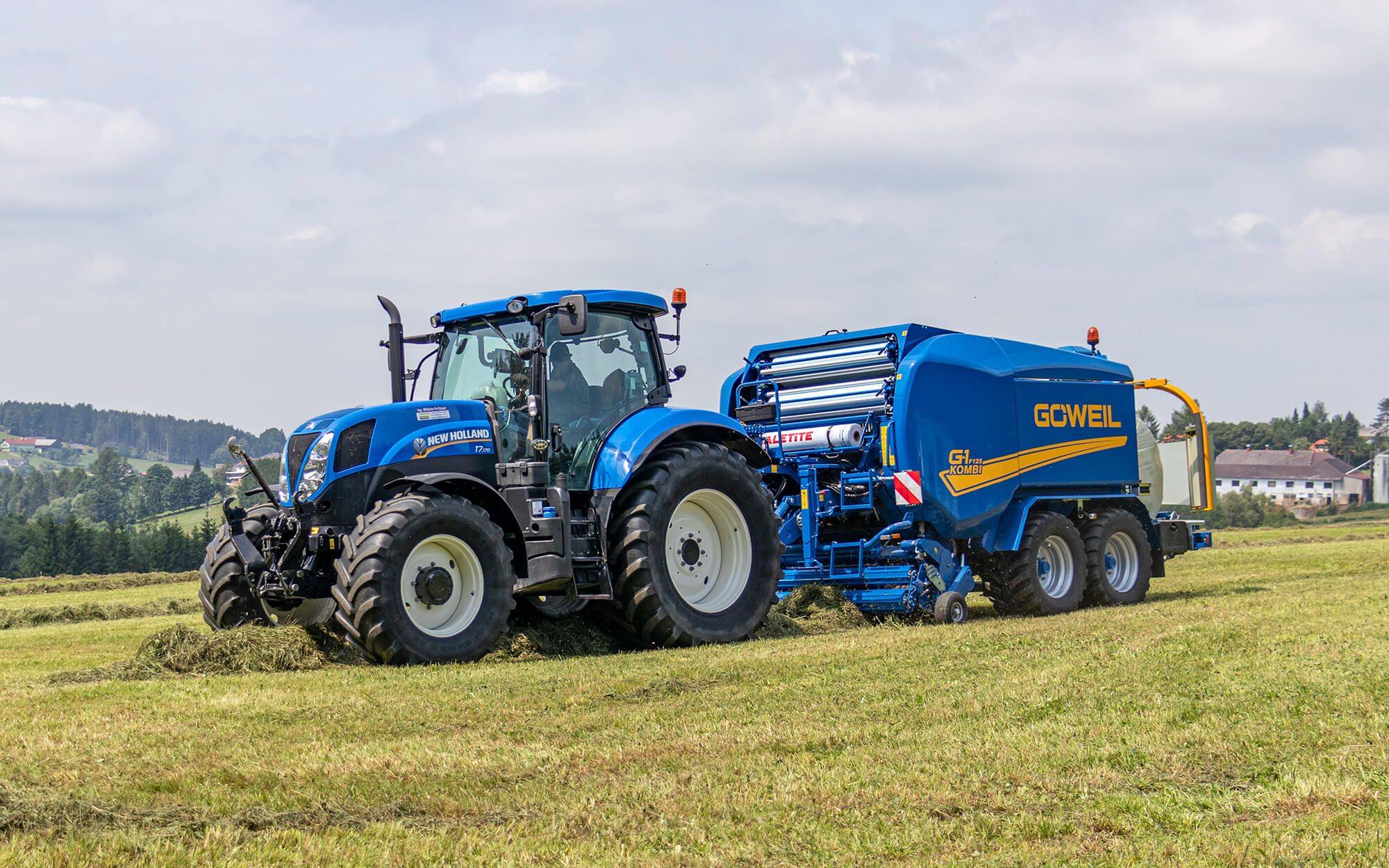
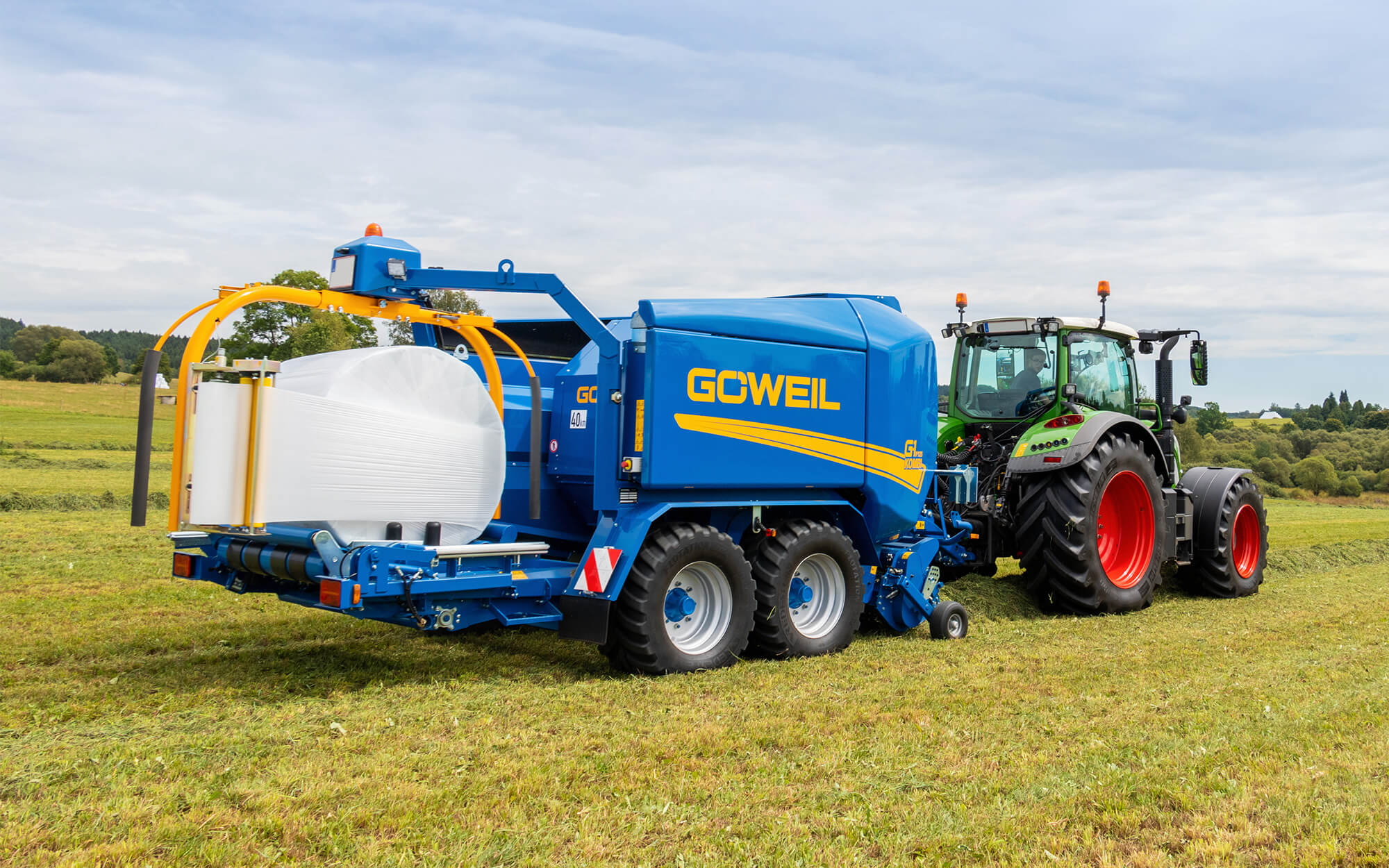
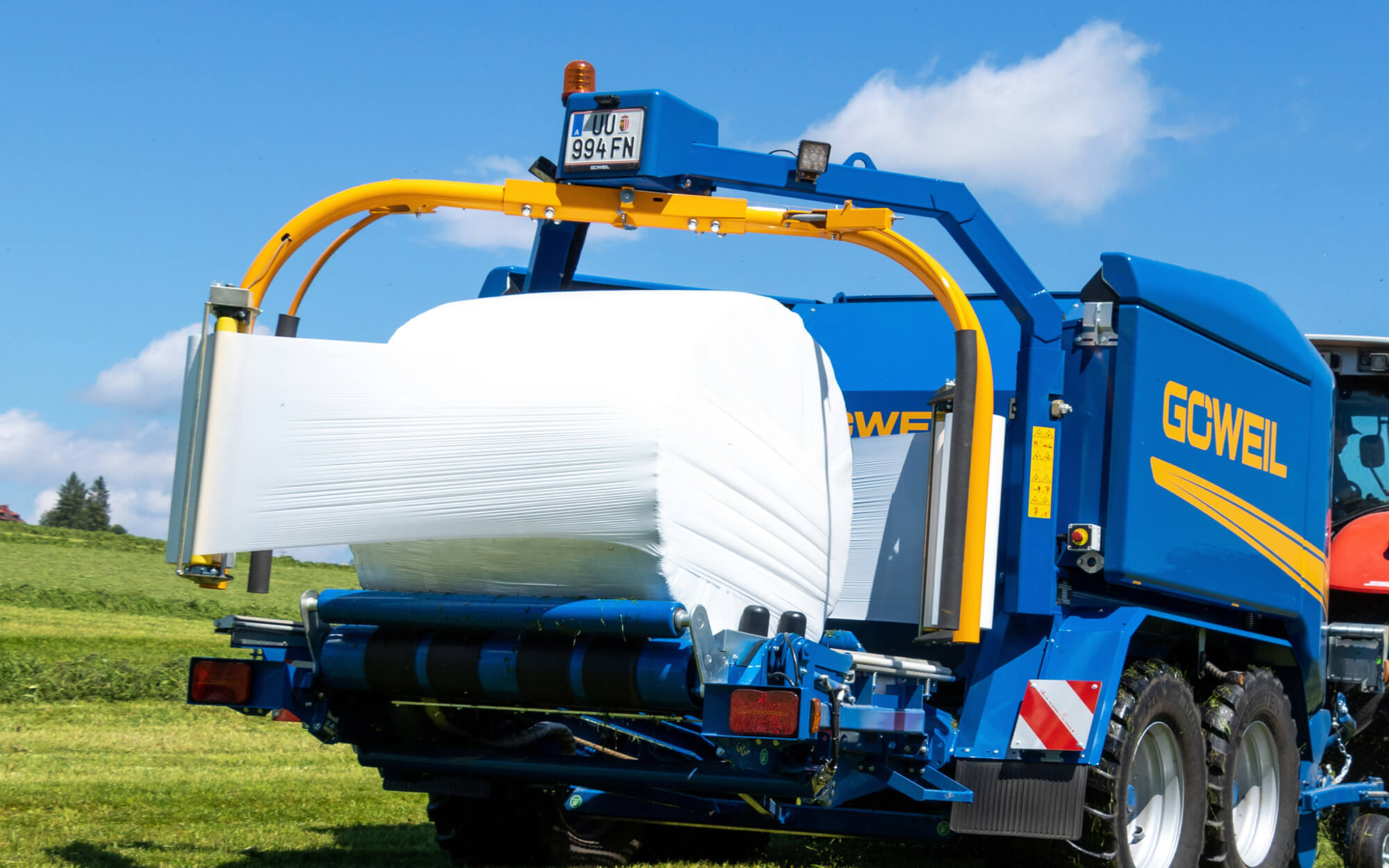
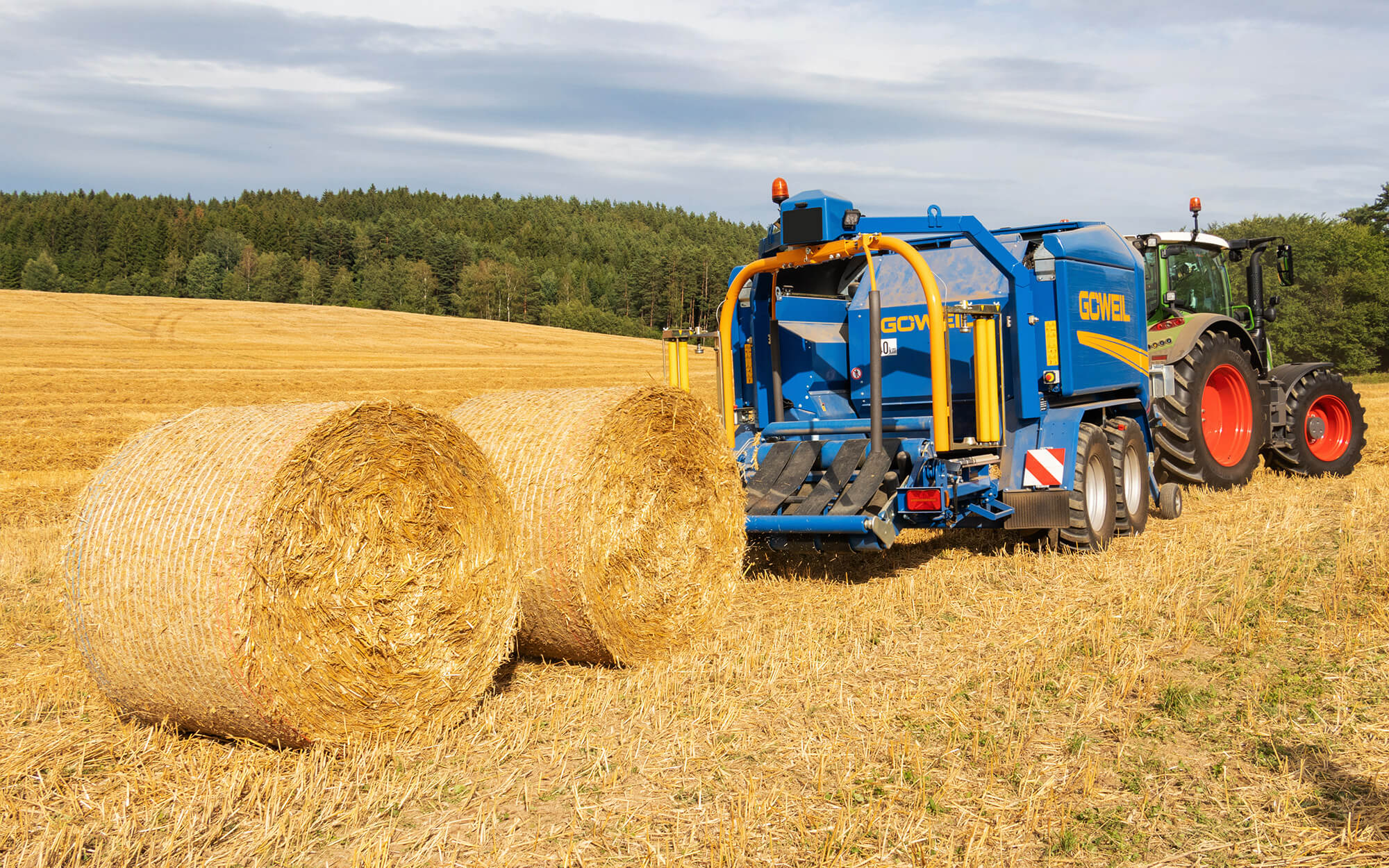
G-1 F125 Estate connects pressing and wrapping on a single machine. This working principle allows for immediate removal of air, thus ensuring highest quality feed. This combination of baler and wrapper allows for a highly efficient operation: one operator, using only one tractor, can both baler and wrap the bales. G-1 F125 Estate - is a professional pressing and wrapping machine with a wide range of advanced solutions and features to ensure top performance.


Highest quality feed
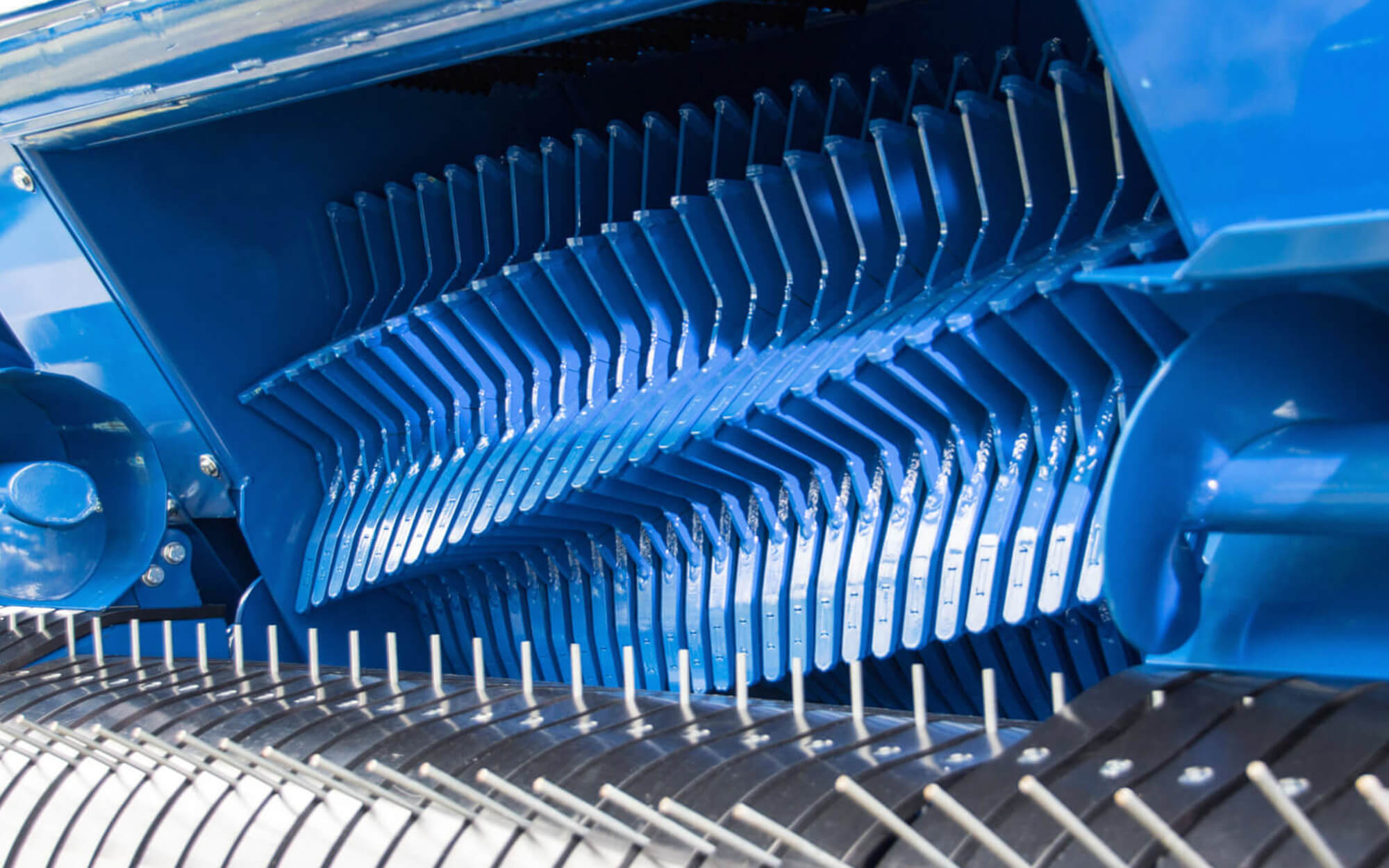
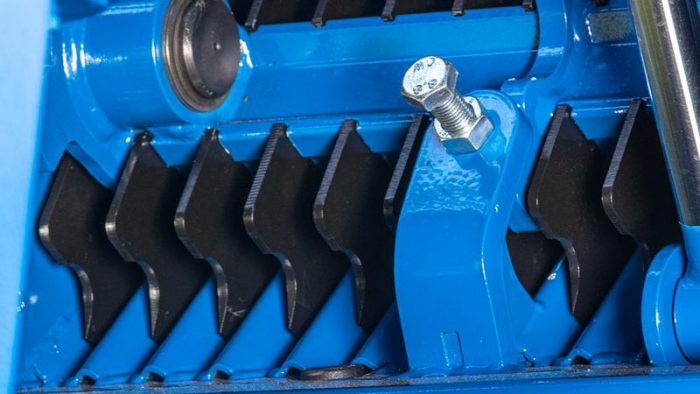
The 30 double-sided knives with cutting lengths of up to 35 mm, combined with maximum compression of the forage, allow the formation of high quality silage bales.

Perfect material flow
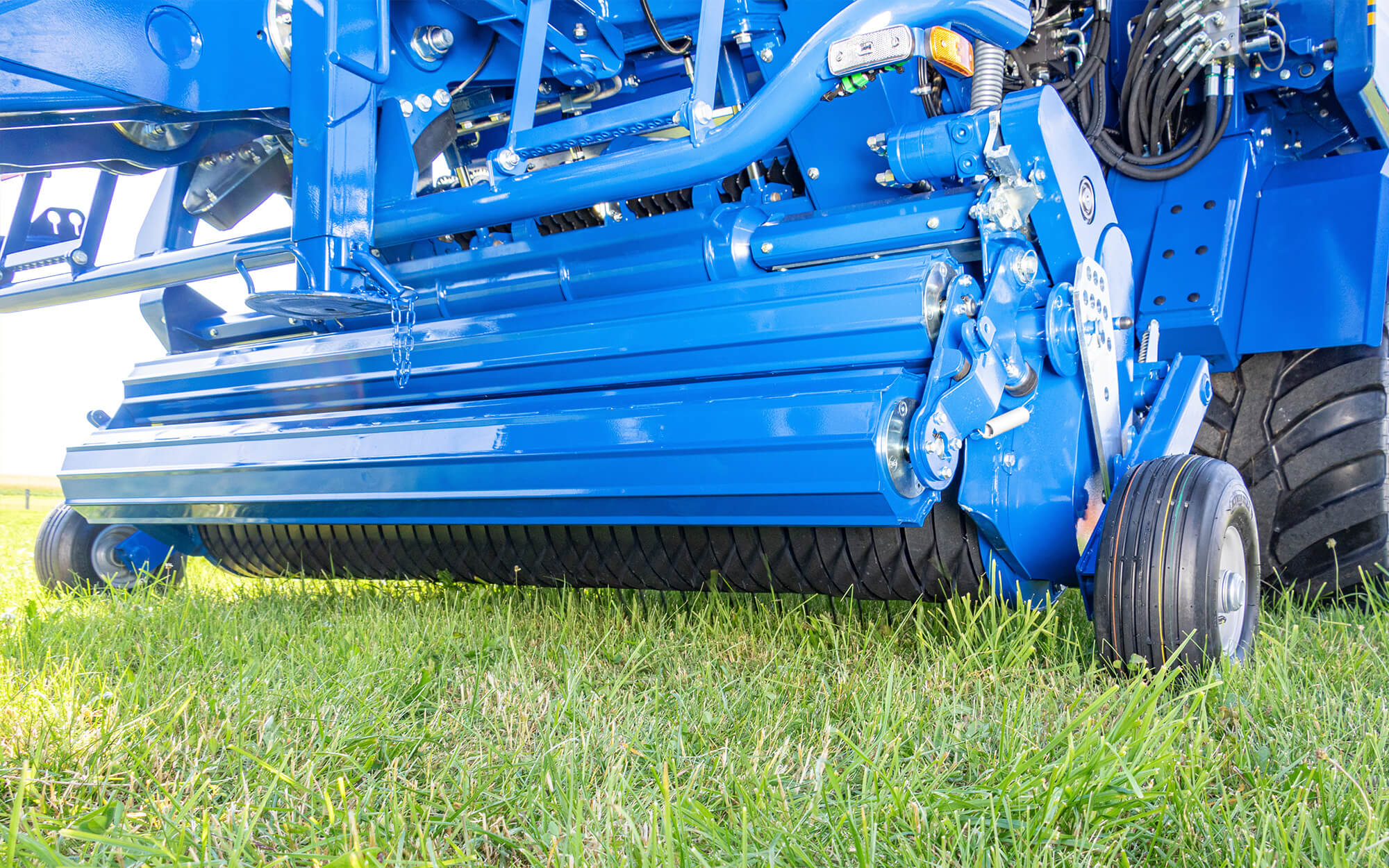
Excellent ground adaptation and high flow capacity. The automatic flow control system ensures that the collector and rotor do not clog up, so that work proceeds smoothly and without interruptions.

Tying of film and net
On request, the round reel press can be equipped with a film binding system as well as a double binding system for both net and film.

Double binding for net and film
The double net and film tying system cuts the tying time in half.

For mountainous areas
The steering axle ensures maximum safety and the highest level of comfort in any slope position - uphill or downhill.

Instant air removal
The roll is wrapped immediately after leaving the pressing chamber, so the air is removed immediately.
Taking feed
The feed is collected by a baler and formed into a roll in the baling chamber.

Roll transmission
Direct roll transfer - fast, clean and simple
Safe roll guidance even on slopes

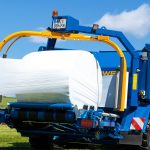
Wrapping process
A double winding arm mechanism and two 750 mm wide film tensioners ensure that the roll is wrapped in a very short time. The winding process is always completed faster than the pressing process. As the roll is precisely guided and held steady throughout the process, it wraps perfectly even when working on slopes.

Placing the roll on the ground
When the roll is fully wound, the film is automatically cut. During the roll feed, the wrapping table moves backwards and lowers all the way to the ground, so that the roll is gently fed without damaging either the film or the roll shape.

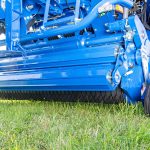
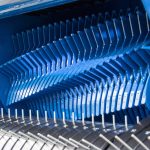
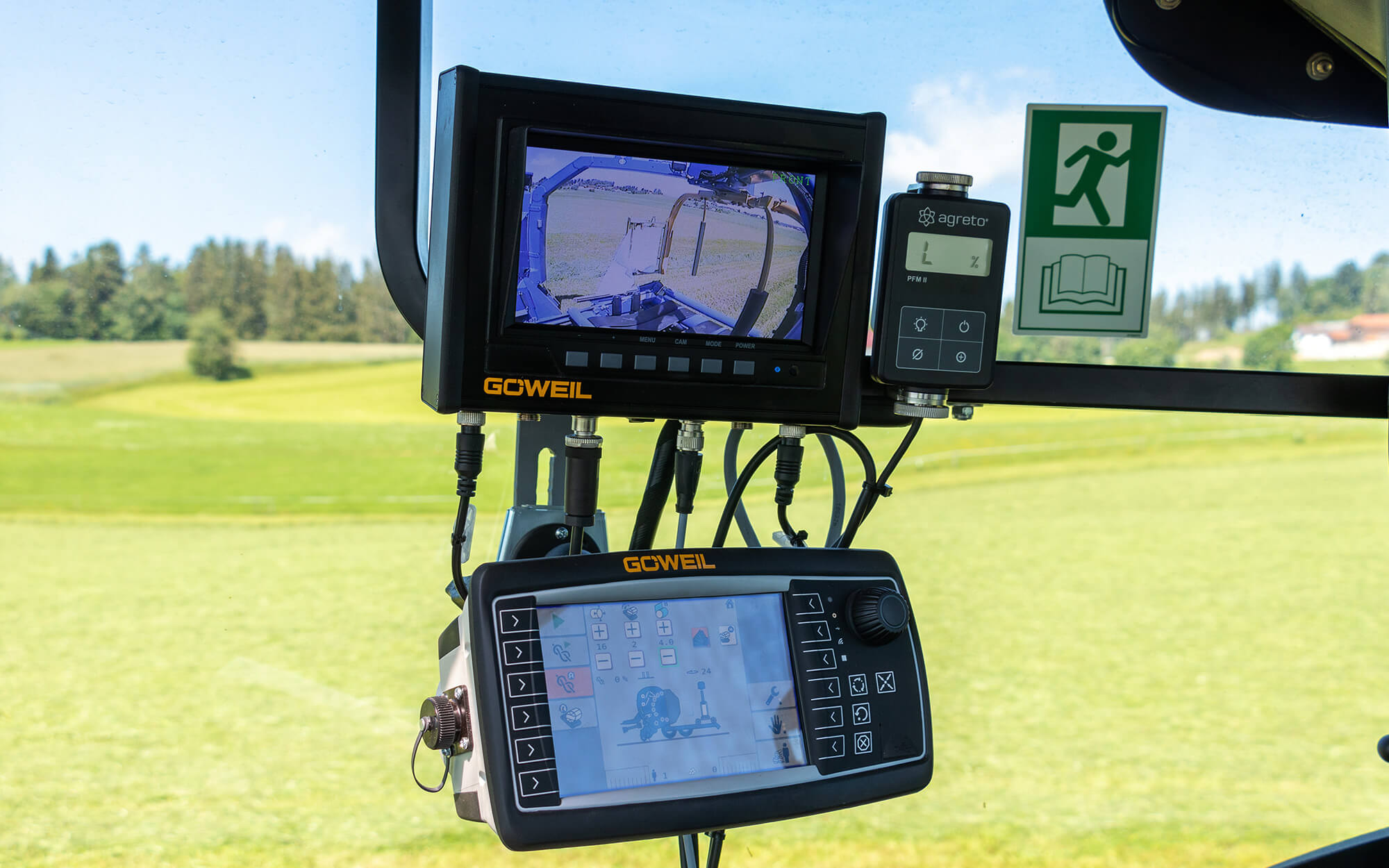
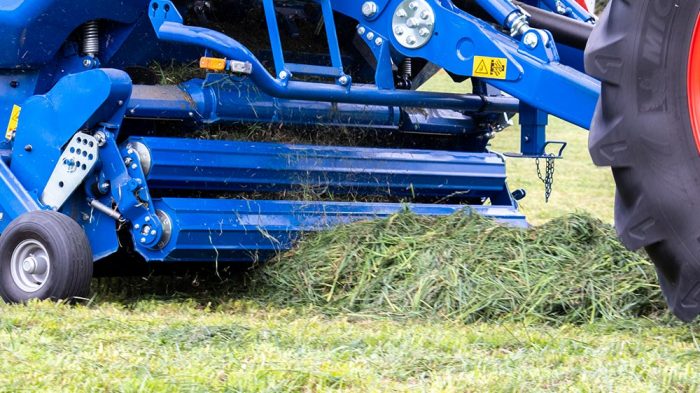
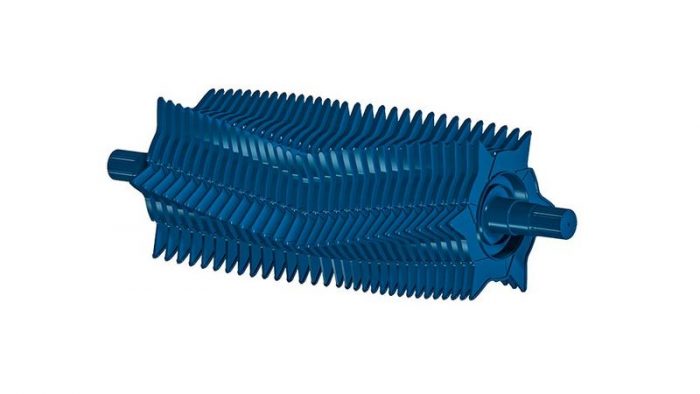
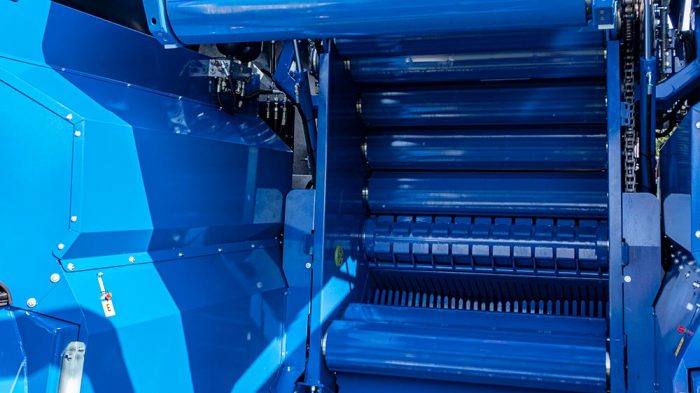
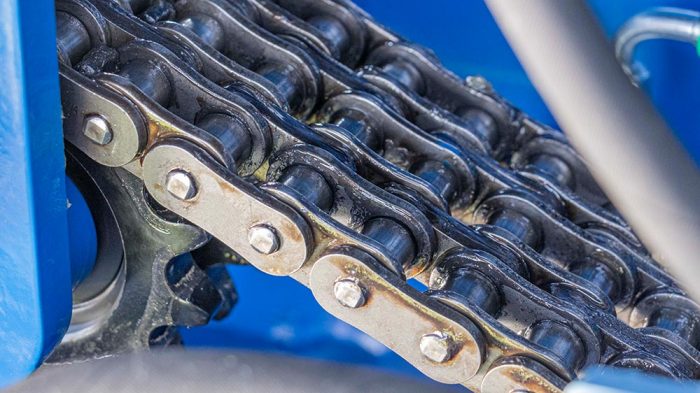
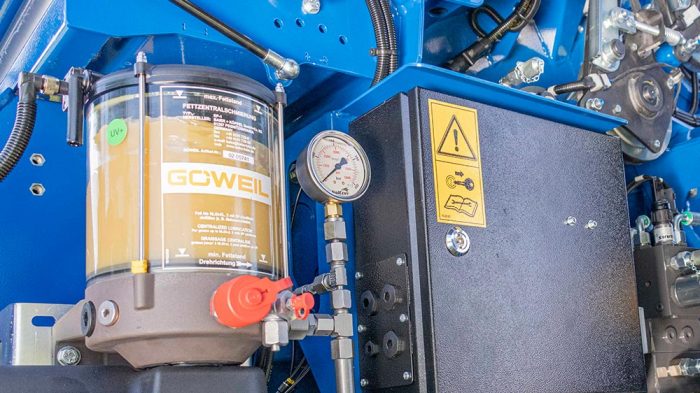
The quality of a tightly compacted roll starts with a clean feed collection by the collector. The pendulum suspension allows the six-row pendulum collector to ensure maximum feeding capacity and excellent ground adaptation. In this way, the unit can effortlessly collect even the largest pradalges. Pendulum dial Pendulum suspension in the centre position gives 150 mm the amplitude of the fluctuations. This ensures excellent ground adaptation and allows easy compensation for any unevenness. As there is no guide disc in the design, the pendulum cultivator has the following characteristics 2,20 m working width (DIN standard) Raking belt and a large screw feed on the sides to ensure optimal material flow to the rotor. Fingers in six rows, spaced at - 51 mm, allows the picker to deliver excellent picking performance, even when working with extremely wide pellets. Plastic separators Plastic separators are another outstanding feature. They are extremely load-resistant and do not bend, even in contact with foreign objects. By effectively separating the material from the fingers, the dividers also improve the flow of feed through the collector. Pinch roller with feed comb The press roller and feed comb system ensures an even flow of feed, even when working with uneven swaths, and allows for a uniform and consistent filling of the press chamber. Easy-rolling support wheels The pneumatic tyred support wheels work in perfect harmony with the pendulum pick-up and offer a very smooth rolling action. Wheel height adjustment is quick and easy - the perforated guides allow tool-free adjustment. Swivel support wheels are available on request. Short and precisely chopped feed is high quality and high energy value silos the basis for production. The GÖWEIL baler is designed with a special channel where the feed flows through the rotor. This feeding system ensures optimal feed intake and feeding under all harvesting conditions. One rotor for all harvest conditions Installed in the centre of the feeding system six-star rotor has an extremely high retraction power. For 570 mm diameter and welded rows of HARDOX fingers, the rotor cuts cleanly through the strands and reliably feeds the forage into the press chamber, whether the forage is coarse and dry or finer and still wet. The rotor is preceded by a mechanically driven feed roller, which is particularly effectively compresses the material before it enters the chamber, thus significantly increasing productivity. A newly designed starter roller in the press chamber ensures optimum roll rotation and a reliable start to the pressing process. Perfect material flow In the G-1 F125, the rotor rotates in the upward direction. This movement directs the feed from the rotor through the cutting system and into the press chamber, ensuring an even and continuous flow of material. Opening bottom and cutting system As the cutting system is located above the rotor, changing the blades is very easy and tool-free. The cutting system has 30 double-sided knives, enabling you to achieve 35 mm cutting length. The small distance between the rotor fingers and the blades ensures that the forage is cut very precisely and cleanly. The interchangeable blade bar allows the operator to carry 30 spare knives or change the number of active knives as needed. A hydraulic safety system protects the knives from foreign objects and automatically returns them to their working position when triggered. The ASV system monitors the entire flow of material and intervenes fully automatically whenever a disturbance is detected in the feed channel. This ensures that blockages in the rotor or collector are cleared quickly and effortlessly. Unhooking the rotor When the feed channel becomes too narrow for the amount of feed being fed, the rotor overload protection the system triggers automatically. The top hydraulic bottom lifts up and the blades slide back. When the rotor is restarted, the excess feed is directed into the compression chamber without obstruction. The bottom is then opened and the blades are returned to their original position, so that foraging can continue without any interference. Uncapping the dial If too much feed accumulates in the collector, an overload protection is triggered. The machine has a press chamber in the core, with dimensions - 1,20 m x 1,25 m, and the inside is equipped with 18 sturdy forming rollers. Steel rollers with a wall thickness of 4 mm, are reinforced internally and have a ribbed surface profile for maximum press density and reliable roll rotation. Press chamber and components Two drive rollers with 65 mm diameter shaftss and additional 60 mm diameter shafts rotate on double pendulum roller bearings for exceptional stability and extremely long life. A specially designed labyrinth seal prevents dust and dirt from entering the bearings. Starter and cleaning rollers The starter roller, mounted directly behind the rotor, ensures optimum roller rotation thanks to its special profile and a reliable start of the baling process, regardless of whether you are baling hay, haylage or straw. The cleaning roller collects and returns the fallen material back to the baling chamber, thus protecting the machine from the accumulation of dirt. Rear camera (lid) The rear chamber of the press opens and closes using two hydraulic cylinders. The press comes with a film and net binding system as standard. A double binding system for both film and net can be fitted as an option. Film binding system The use of a wide film offers substantial advantages that improve the quality of the silage: The operator can use standard wide films or nets up to 1.50 m wide. The tying process can be started automatically or manually. A hydraulically adjustable brake roller ensures that the roll is firmly wrapped around both the net and the film during the tying process. The brake pressures and the number of layers are set directly via the control panel. Double binding in half the time With the introduction of the world's first double binding system, the G-1 takes a new step in round baler technology. This optional binding system allows the roll to be wrapped with two nets or two wide films simultaneously. The result is a halving of the tying time, as well as a halving of the time needed to change the net or film. This solution significantly reduces the operator's workload and the time saved is particularly valuable during the busiest harvest times. If the operator needs to baler bales of hay, haylage or straw on the same day, the machine allows the double film binding system to be used as a single one. In this case, one binder is loaded with a net roll and the other with a film roll. The operator usually determines via the control terminal which unit to use for net tying and which for film tying. There is no downtime for film or net changes. As an optional extra, the drive axle offers a significant advantage, especially when working on steep slopes. It provides powerful but soil-friendly uphill pushing and assists with braking when going downhill. This allows the operator to concentrate fully on the job. Sensor system integrated in the connecting arm (towing frame) Fully autonomous control of driving, idling and braking modes. The operator can rely on the system to provide maximum traction combined with soil protection, allowing him to concentrate fully on the work process. The clearly arranged display keeps you informed of all the most important working parameters. The gear is hydraulically driven by two radial piston/wheel hub motors. Drive direction (forward or reverse) automatically changed on signal from the tractor. The distribution of the driving force in first and second drive modes is controlled via a terminal. When the machine is going uphill - both forward and reverse - the drive automatically switches from driving mode to hydrostatic braking mode. When driving on the road, the radial piston motors are automatically mechanically disconnected and rotate freely without mechanical resistance. GÖWEIL's split drive concept ensures that the Automatic Flow Control (AFC) operates smoothly and guarantees extremely high performance. The power transmitted to the main gearbox via the PTO drive is evenly distributed between the drive chains of the rotor, the picker and the press chamber, each of which is individually protected by two cam clutches. The operation of these clutches is monitored by an ISOBUS software control system. When the rotor cam clutch is triggered by too much feed in the feed channel, the hydraulic hinged bottom automatically opens. When the cam clutch of the press chamber is actuated, the rear cover automatically opens a few centimetres, allowing the roll to start forming and to be bound without disturbance. Maximum productivity thanks to extra-strong chains High-quality components are a prerequisite for a smooth and reliable drive system. The latest generation of machines use oversized chains for the main drive, as well as for the pick-up and rotor drives, further increasing the performance of the entire system. This solution significantly extends the life of the machine and keeps operating costs to a minimum. Robust roller bearing designs All press rollers are mounted on robust, double-pivot roller bearings with a diameter of 60 mm. In addition, the two drive rollers are equipped with even larger bearings of 65 mm for extra strength and durability. GÖWEIL provides this generation of presses with the ISOBUS system as standard equipment. The control interface is clearly laid out and easy to operate, and the colour display provides more information at a glance. In addition, the camera system gives the operator an excellent view of the workflow and machine operation. The ISOBUS terminal G7 (7.0″) with 10 control buttons and a coding wheel is also available. These machines are of course compatible with all other ISOBUS-enabled terminals. For tractors without ISOBUS, the following are available additional ISOBUS power cable kit. The ISOBUS system monitors and controls the entire work process fully automatically. The G-1 F125 Kombi model uses push-button control unit is particularly useful for wrapper maintenance or servicing, as it allows you to control key functions directly to the machine. Fitted as standard automatic central lubrication system ensures easy maintenance and an extremely long machine life.
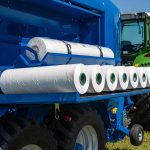
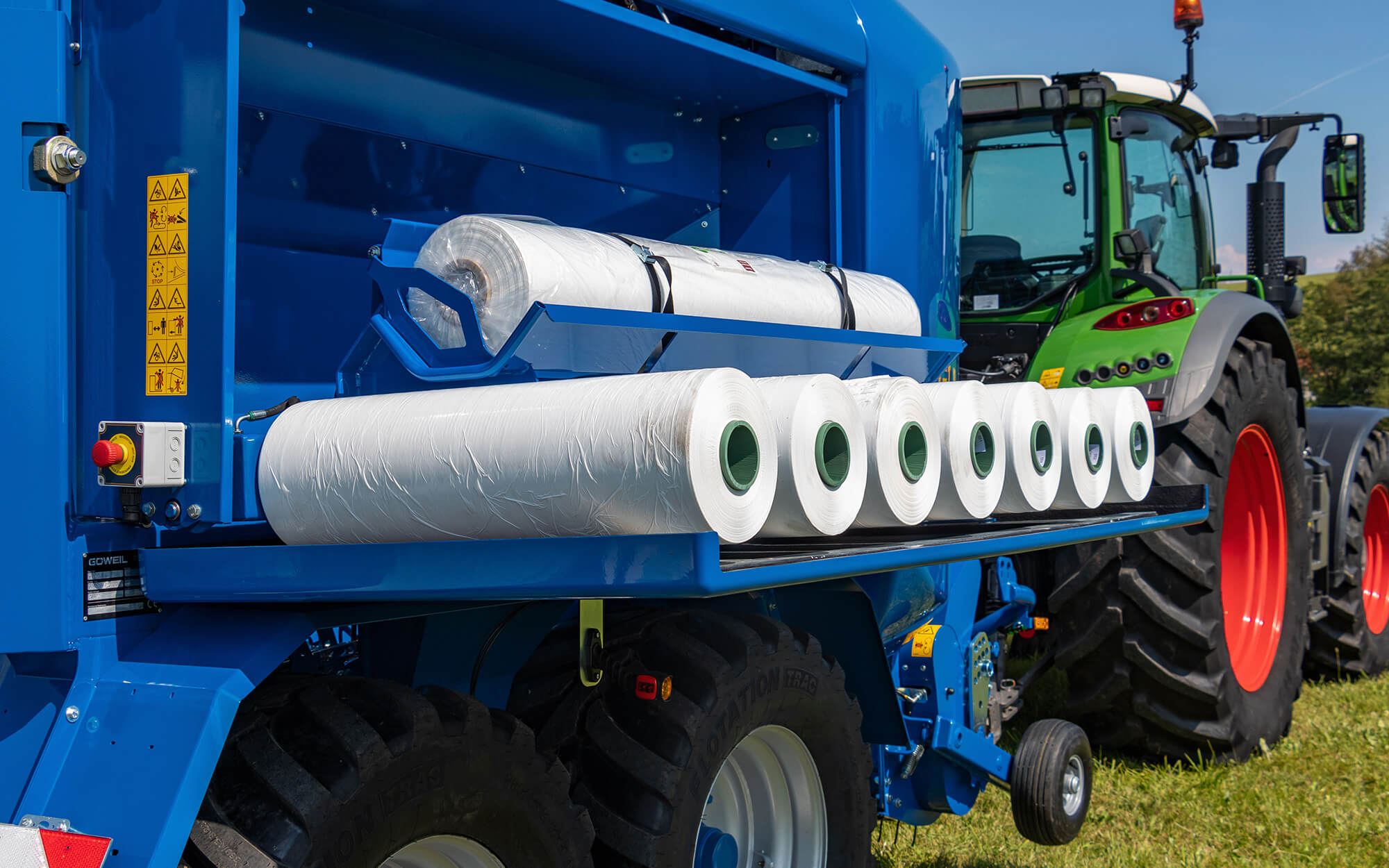
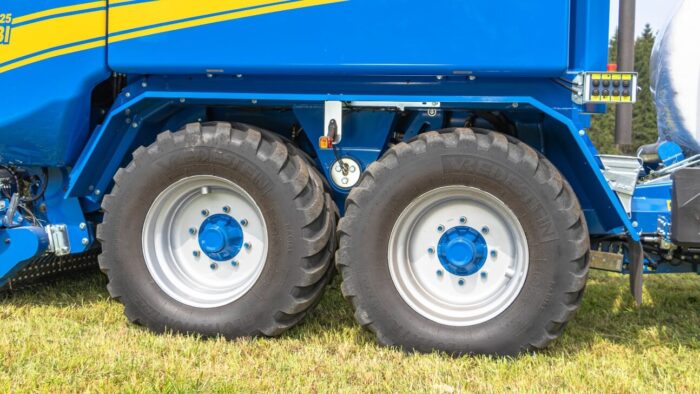
Robust and reliable frame construction and quality assembly ensure a highly long preso-uniotuvo lifetime. The G-1 F125 Kombi has an exceptional manoeuvrability and soil-saving performance thanks to its compact design and short axle spacing. In addition, the low centre of gravity provides unrivalled handling, even when working on slopes. „Load Sensing system Standard hydraulic Load Sensing control system automatically adjusts oil flow based on actual demand. Such a control system allows multiple functions to be carried out simultaneously, while reducing fuel consumption. The result is more rolls per hour. In addition, the machine can be used with tractors without a Load Sensing pump. Chassis The two-axle chassis is distinguished by larger wheels - fitted as standard Vredestein Flotation Trac 560/45-R22.5 tyres. The even weight distribution system and the small distance between the axles ensure that the baler is stable and easy to handle. In addition, the load on the soil is considerably reduced, allowing the Kombi to run smoothly at speeds of up to 40 km/h, in soft soil and on the road. Despite the wider tyres, the overall machine the width remains 3,00 m. For more demanding working conditions, you can choose Nokian 710/35-R22.5 tyres that increase the width of the machine up to 3,30 m. The G-1 F125 Estate can also be equipped with either a dual-line air brake system or a hydraulic dual-circuit brake system. Push-button control unit The control unit is particularly useful for machine maintenance or servicing. It allows the operator to control all the main functions directly at the wrapper, making tasks such as film changes quick and easy. Double wrapping lever with film tensioners Double winding lever equipped with two 750 mm wide film stretchers. Three patented plastic rollers ensure even film tension and are designed with resistant to temperature changes. This feature reduces film consumption and ensures that the rolls are tightly and hermetically wrapped. The tensioners are height-adjustable, so the rolls are always wound exactly through the centre. A quick release system allows empty film rolls to be replaced fast and effortless. The film monitoring system stops the winding process if the film runs out or breaks. When one roll of film runs out, the machine automatically switches over to single-film mode. Currently, the wrapping table feed speed is reduced to ensure 50 overlaps of % film. Rotating wrapping arm with stationary wrapping table This system reliably prevents the roll from falling because it is not subject to centrifugal forces. The conveyor belts and four rotating roller guide rollers ensure that the roller is constantly moving forward, allowing even overlap of film layers. When it's time to put the roll on the ground, the mobile wrapping table lowered to the ground, This allows the roll to be gently placed without damaging its shape or film. Closed film storage The new design of the film storage unit offers improved design and functionality. The closed, hydraulically opened film storage unit can accommodate 14 rolls of wrapping film and 2 rolls of wide film or net, while protecting them from weather and damage. The tilting mechanism allows the operator to comfortably load or unload the film while maintaining a comfortable working height. This solution allows wrapping of approximately 300 to 400 rolls, depending on the number of film layers used. Automatic film cutting and holding system The stainless steel blades cut the wrapping film smoothly and precisely. At the same time, the cutter lever holds the film in place. Only after the wrapping process has started, the standard position allows easy unwinding of the film.
Collector


Feeding system
Automatic Flow Control (AFC)
The normally mechanically driven feed roller is then briefly switched to hydraulic control to continue feeding the material. At the same time, the hinged bottom moves upwards, allowing the feed to flow directly into the press chamber.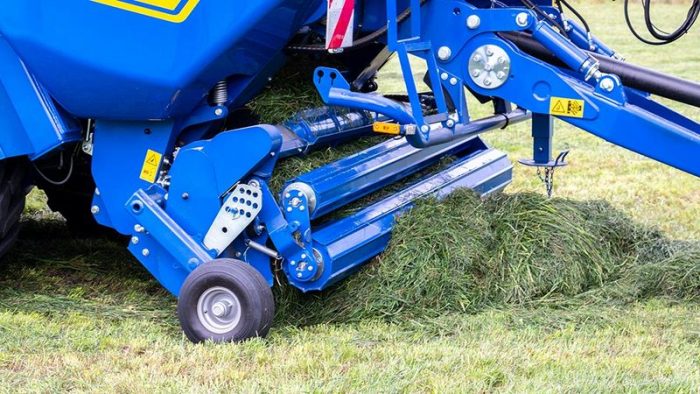
Baling chamber
Depending on the setting of the selected programme, this process can be done automatically or manually.

Tying of film and net


Driving axle
To prevent wheel lockup, the speed of both driving wheels is continuously monitored and automatically regulated, so that the wheels always stay in motion when going uphill (ABS function).
Gear
When the rotor is restarted, the excess feed is guided into the compression chamber without obstruction and the bottom automatically closes, allowing the compression process to continue without interruption.

ISOBUS control
The clearly structured display keeps the operator fully informed of the work steps being carried out. It is also possible to manually control the main work steps quickly and conveniently via the terminal.


Maintenance


Wrapping process


| G1 F125 COMBI | |
|---|---|
| Total height of single and double tie-down without/with warning beacon, mm | 2 820 / 2 980 |
| Total length, mm | 7 420 |
| Overall width (with standard 560/45-R22.5 tires), mm | 3 000 |
| Overall width (with optional 650/40-R22.5 tyres), mm | 3 300 |
| Overall width (with optional 710/35-R22.5 tires), mm | 3 300 |
| Total weight, kg | 8 980 |
| Power shaft speed, rpm | 1 000 |
| Roll diameter, m | 1,25 |
| Oil demand at 200 bar, from l/min | 80 |
| Optimum oil demand at 200 bar, from l/min | 105 |
| Minimum power requirement, HP | 120 |
Over the past few decades, since 1988, GOWEIL has established itself in the market as a specialist in the production of hay bale wrappers.
Because the company GOWEIL Maschinenbau GmbH exports the majority of its production – the 86% – and the machines are known and widely used all over the world. All machines and equipment are designed, developed and manufactured exclusively at the company's headquarters in Kirchschlag (Upper Austria).
All GOWEIL The products reflect the latest technologies and are designed to meet the individual needs of farms.